
锵锵三人行
Chinese scientists develop ‘brain-reading’ AI model to help predict depression risk, may inspire future emotional-perception humanoids_我的网站

一 |
Chinese scientists have developed a “brain-reading” AI model that could help predict the risk of depression among adolescents up to four years in advance by analyzing how humans respond to facial expressions, a technology expected to inspire future development of embodied intelligent humanoids capable of perceiving human emotion and thoughts through nuanced facial cues.
WHO data show that around 332 million people worldwide have depression, about one-third of whom have treatment-resistant forms of the condition. In China, an estimated 95 million people suffer from depression, National Business Daily reported, citing statistics from the China Mental Health Survey.
Using data from a population-based longitudinal adolescent cohort recruited across several European countries, the research team led by Lu Han, assistant professor at the School of Artificial Intelligence, Shenzhen University, has built an AI model that predicted which 19-year-olds were more likely to develop depression at the age of 23. The predictions were backed up by an independent clinical cohort of individuals with depression. The team’s paper was published in the journal Science Advances this month.
According to Lu, the study used brain scans taken at age 19 to predict depression-related symptoms at age 23. The study focuses on adolescence because the transition from adolescence to early adulthood is a key developmental period when depressive symptoms can increase rapidly. The earlier risks are identified, the greater the opportunity for prevention, Lu told the Global Times on Monday, adding that the findings need to be further validated in middle-aged and older adults and across different ethnic groups in future research.
In this study, the researchers analyzed data from adolescents in the IMAGEN, a population-based longitudinal cohort recruited across several European countries. At age 19, participants underwent an fMRI emotional-face task, and their emotional symptoms were assessed using standardized questionnaires. Genetic data obtained from blood samples were also analyzed, and participants were followed up at age 23. The researchers examined whether neural representations of angry faces at age 19 were associated with emotional symptoms and could predict elevated emotional symptoms four years later.
According to Lu, people without depression can more easily distinguish emotional changes based on others’ facial expressions and respond accordingly – for example, responding with friendliness to a smiling expression. But people with depression cannot do this, and are more likely to assume people are angry with them.
A brain-aligned deep-learning model developed by Lu’s team suggested that those participants whose brains were less able to distinguish between different facial emotions and tended to perceive others as angry were more likely to develop symptoms of depression and anxiety in adulthood.
The hypothesis that adolescents at risk of depression may respond differently to other people’s facial expressions than those without such risk based on the negative information processing bias long observed in depression research: people at risk of depression are more likely to notice, interpret, or remember negative social information, Lu said.
The researchers focused on angry facial expressions because they signal social threat and rejection, which are closely linked to interpersonal difficulties and negativity bias associated with depression. They hope to further understand how this bias develops within the visual system.
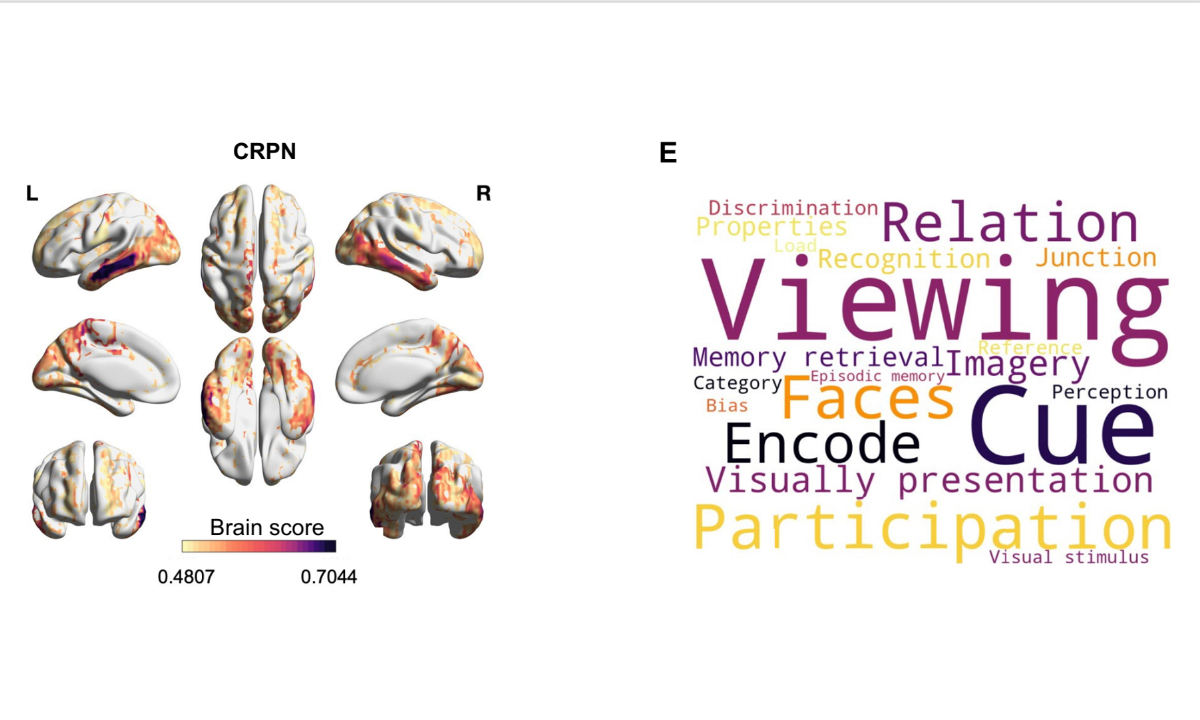
Building on this, they created a deep learning model, which mimics how the brain processes visual information, to predict how the brain encodes abstract emotional concepts such as anger.
They found that 19-year-olds whose response to facial expressions was skewed in favour of negative emotions or memories were the most likely to develop some form of depression.
Based on these findings, Lu’s team then developed a marker that can identify possible warning signs.
According to Lu, the study found that the computational biomarker was linked to the depression-related variant rs11123030 and polygenic risk for depression, suggesting that genetic susceptibility may affect emotional perception. It also provided predictive information beyond family stress and socioeconomic factors, complementing rather than replacing environmental risk factors. Therefore, depression is neither purely genetic nor purely psychological, but a complex mental disorder arising from the interplay of genetic susceptibility, brain development, emotional and cognitive processes, and life experiences.
According to Lu, the study is also expected to advance AI by aligning deep neural networks with human brain activity and using parameter perturbations to probe neural mechanisms, allowing models to both predict and explain how biases may arise.
The findings suggest that future affective computing and embodied AI should go beyond simply labeling facial expressions, incorporating visual details while preventing prior assumptions from overriding real-time sensory input, Lu said, adding that the findings could provide valuable insights for developing more interpretable robotic perception systems that more closely emulate the way humans process emotions.
。 At least 12 people, including schoolchildren, were killed and three suffered serious injuries after a bus fell into a gorge in India's Himachal Pradesh on Monday morning.,There were around 15 passengers, including school staff and students, who were travelling from Kullu to Sainj on Neoli-Shansher road in the Sainj Valley, officials said.,© Photo : TwitterVisual of the damaged bus rolled off a cliff in India's Himanchal Pradesh state's Kullu districtVisual of the damaged bus rolled off a cliff in India's Himanchal Pradesh state's Kullu district© Photo : Twitter,Prime Minister Narendra Modi's office expressed grief over the tragic incident and ordered the local administration to provide all possible assistance to those affected.,© Photo : TwitterIndia's Prime Minister Narendra Modi expressed grief over the tragic bus accident in Himachal Pradesh state's Kullu districtIndia's Prime Minister Narendra Modi expressed grief over the tragic bus accident in Himachal Pradesh state's Kullu district© Photo : Twitter,District officials and rescue teams rushed to the spot and managed to save some passengers, who have now been taken to a nearby hospital.,Himachal Pradesh state chief Jairam Thakur and his team are supervising the relief and rescue operation. An investigation has been launched.,#UPDATE Himachal Pradesh | Death toll rises to 11 in the Kullu bus accident, rescue work on. pic.twitter.com/jCEP8v6fOe— ANI (@ANI) July 4, 2022,Want to know more? Check out our Koo & Telegram accounts!,Koo: https://www.kooapp.com/profile/sputniknews,Sputnik India: https://t.me/sputniknewsindia。
Current article:http://www.lindunfokangliucishirun.shop/eq7jcg/1vxfhc.xlsx
Published on:12:32:39
最新文章
- 朱啸虎们押注的300元AI玩偶,先得跑赢“退货潮”
- 扩大银发产品有效供给 “养老刚需”也是产业蓝海,扩大银发产品有效供给 “养老刚需”也是产业蓝海
- “代工之王”富士康的焦虑,需要特斯拉来治?
- 乐小星乐游科创盛会 2026世界人工智能大会的体彩身影
- 青海海南州兴海县发生3.6级地震,震源深度10公里
- Hyrox, rock climbing gain momentum, yet growing rehabilitation challenge lies behind
- 731部队海拉尔支队档案揭露日军掩盖细菌战罪行
- 岛内各界纪念日本无条件投降81周年 “历史正义不容忘却,更不容扭曲”
- 《全国供销合作社“十五五”发展规划》发布
- 价格周报|立秋后气温回落、终端消费略有改善 本周猪价上涨收复11元/公斤
标签云
热门文章
- Cosmo双屏翻盖全键盘手机手持视频:诺基亚9000 Legacy
- 神农架42290031号站:大九湖畔筑公益暖心港湾
- 网友收到“四川宜宾发生7.7级地震”预警信息,官方通报
- 乌总统办公室主任卷入巨额洗钱案,被曝受泽连斯基指示
- 火车上的“自助餐”
- 双色球中出10注710万元头奖,善意出发,幸运抵达!
- 我们期待在 2027 年及以后的 Universes Beyond 中看到的 7 个 万智牌:旅法师对决 联动项目
- 勇士盯上被76人裁掉的达伦-特里 邀其参加训练营
- Stability AI 完成 7600 万美元 B 轮融资:EA 与三大音乐娱乐企业均参投
- 佳明旗下 Fenix 9/Pro 智能手表曝光:可选半反半透屏太阳能充电版本