
妖女迷行
Chinese cities turn to AI forecasts, smart radar networks to combat extreme weather_我的网站

A | 10月15日,市委书记高键主持召开专题会议,听取新城路、永城街部分路段维修改造进展情况汇报,对加快推进相关工作进行安排部署。
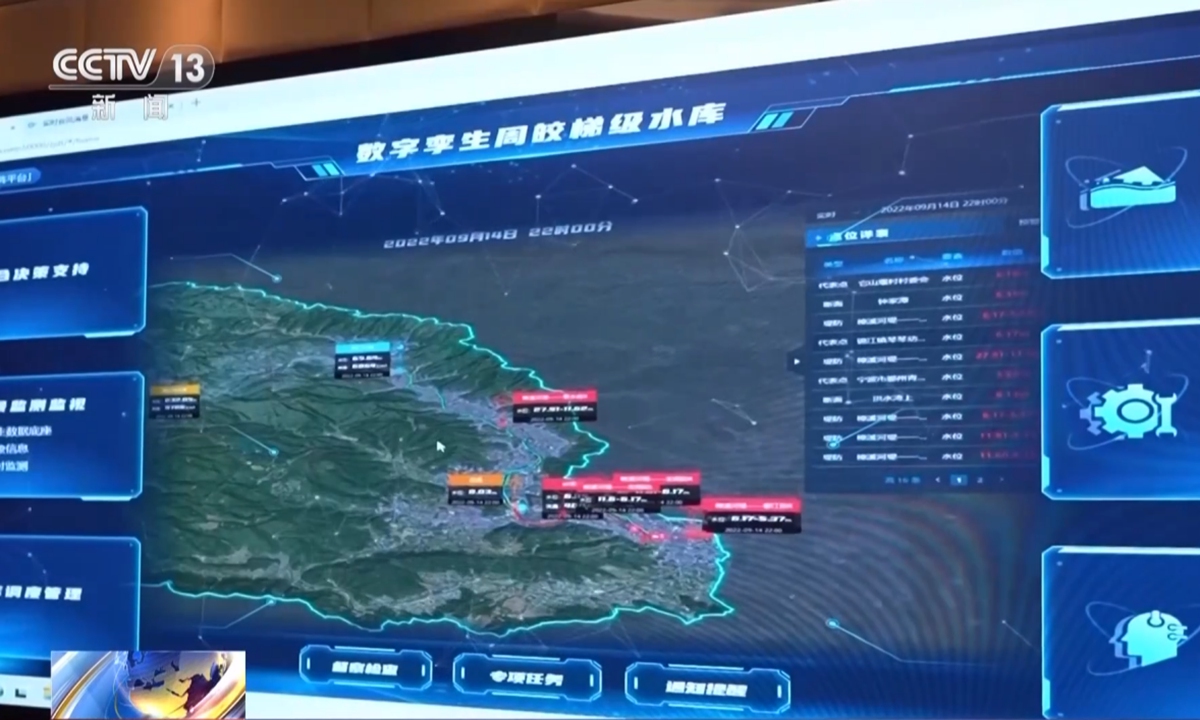
From AI-powered flood forecasting and digital twins to smart reservoir management, phased-array radar networks and ground-based remote sensing systems, a new generation of high-tech equipment and systems is helping Chinese cities sharpen weather forecasts, improve flood control and make faster, more precise decisions to stay one step ahead of extreme weather.
In Ningbo, East China's Zhejiang Province, where water resources are relatively limited, the calculation of reservoir water release is tricky. If you release too much, the city could find itself short of water after the storm, however if you release too little, the reservoir may struggle to accommodate the floodwater brought by torrential rain.
Finding that balance is now increasingly a job for AI.
"The balance point has to be continuously analyzed and calculated by the dispatching software," Jiang Yutian, a department director at the Ningbo Water Conservancy & Hydropower Planning and Design Institute Co., Ltd., said, according to CCTV News.
At the heart of the system is an AI forecasting model that dramatically speeds up calculations.
For the Yongjiang River basin, running a complete flood-control scenario used to take five to 10 minutes. The new model can complete the calculation in just five to 10 seconds, cutting the time required to around one-sixtieth of the previous level.
Using rainfall forecasts and changing water levels, the model refreshes its recommendations every five minutes, calculating how much water should be released, how much can be stored later and how much reservoir capacity will remain when the flood peak arrives. Dispatchers can then adjust water releases in real time, per CCTV's report.
AI is not working alone. A digital-twin dispatching platform allows reservoirs to be managed together rather than individually. Across Ningbo's 16 major medium- and large-sized flood-control reservoirs, operators can see in real time which are approaching capacity and which still have room to take more water.
Hundreds of kilometers inland, another city is using a different technological set of technologies to tackle the same challenge of weather uncertainty.
Nanyang in Central China's Henan Province, which lies in a basin surrounded by mountains on three sides, has experienced widespread heavy rainfall since Monday under the influence of Typhoon Dolphin. Its geography leaves the city exposed to a combination of risks, including urban waterlogging, flooding in small and medium-sized rivers and inundation of farmland.
To track storms more precisely, the Nanyang meteorological authority has deployed a network of four newly installed X-band dual-polarization phased-array radars, together with an S-band dual-polarization radar and a ground-based vertical remote sensing system, according to the China Meteorological Administration.
The equipment allows forecasters to closely track the development and movement of convective clouds and identify areas at risk of intense rainfall earlier.
The city's meteorological authority has also integrated weather data with a citywide video monitoring network covering vulnerable locations such as underpasses, tunnels, river embankments and mountainous villages. This allows forecasters to compare what instruments are detecting with what is actually happening on the ground.
Together, the approaches in Ningbo and Nanyang offer a glimpse of how China's weather-disaster prevention efforts are becoming increasingly digital and intelligent, using faster calculations, denser observations and real-time data to bring greater certainty to decisions made in the face of uncertain weather.
Global Times
。抚矿集团党委书记、董事长李兆福出席。 高键强调,抓好新城路、永城街部分路段维修改造,是建设宜居宜业城市、保障和改善民生、推动城市高质量发展的务实举措,是以良好形象迎接全国第十五届冬季运动会的打样工程。各级各有关部门要提高政治站位,统一思想认识,保质量、保安全、抢进度,高标准做好城区道路维修改造工作,进一步完善城市功能、提升城市品质。要牢固树立精品意识,注重工程质量,提高建设标准,全力打造高品质的样板工程、示范道路。要按照既定的时间表、路线图,抢抓当前施工“窗口期”,在保证安全和质量的前提下,优化施工方案,配强施工力量,加大推进力度,确保如期竣工达效。要加强组织领导,强化协同配合,及时协调解决施工中的困难和问题,切实把改造工程建好、把民生实事办好。 会后,高键一行来到新城路施工现场,与抚矿集团施工单位进行深入交流,详细了解道路维修改造方案、建设标准、工程进展等情况。他强调,施工单位要强化节点意识,克服时间紧、任务重等困难,倒排工期、挂图作战,全面加快建设进度。要加强工程管理,严格落实安全生产责任制,做到科学施工、安全施工、绿色施工。

B | 相关部门要强化统筹观念,合理安排施工时序,进一步优化交通组织,最大限度保障市民出行通畅,减少施工对周边正常生产生活的影响。 市领导雒荣广、于海峰,抚矿集团总经理周明弘出席,顺城区、市直相关部门负责人参加。 责任编辑:刘春阳。
Current article:http://www.lindunfokangliucishirun.shop/heplj/ew7.ppt
Published on:16:13:05
 TikTok profiting from Syrian refugees plight: Report
 [속보] "장씨 최초 실종 112신고 녹음파일 확보 못 해…당시 수색 우선"
 China's Wang Manyu wins women's singles title at WTT Europe Smash Sweden
 【IT居家评估室】散热性强、散热性好、散热性好:Sotai Geforce RTX 2060 Supreme Plus显卡评估
 智拓网游专营店
 截至7月底,全国碳排放权交易市场累计成交量突破9.3亿吨
我的网站最新内容
- ·A new start
- ·跨越7000公里,探寻原始猎食渴望"非凡食材"背后的答案
- ·福建启动困境儿童重特大疾病救助
- ·中国不点头,美国就拿伊朗没招?特朗普又要对华加税,已经骑虎难下,兵器集中营,原创 中国不点头,美国就拿伊朗没招?特朗普又要对华加税,已经骑虎难下
- ·王思远:让多宝鱼“跃”向更广的市场
- ·王宗源完美接班 统治力日渐明显
- ·收官之作!检验类立项指南正式发布
- ·双线新区同步开服!《无忧》7200元宝豪礼,零氪开荒起点拉满!
- ·30岁妈妈跳河救11岁女儿溺水身亡!亲属:她眼神中满是恐惧,却义无反顾
- ·保育保健||预防甲流,守护健康——预防甲流知识宣传
- ·《香港文学》刊行500期扎根香港面向世界
- ·台工商产业界冀两岸往来顺畅 国台办指“民心所向”
- ·U.S. sanctions 10 individuals for 'transferring cash' to Hezbollah
- ·취임 1년 맞아 기자회견하는 장동혁 대표
- ·已确认!当场击毙!
- ·Why China's favorability is rising across the Global South
我的网站热点内容
- ·霹雳舞首场奥运积分赛完赛 刘清漪获世运会第四名
- ·Nearly 120 automobile brands to participate in Chengdu International Motor Show
- ·故事:号称江湖界的天花板加代大战东莞“太子辉”
- ·东部谁能抗衡76人?尼克斯热火短板明显 猛龙重组“死亡五小”阵容
- ·US Challenges China's Influence Over Pacific Island Countries, But Does It Have Much to Offer?
- ·带伤出战!36岁老将刘晓宇3投1中得到2分1板5助1断0失误
- ·第十三届哈尔滨朝鲜族民俗文化展演举行
- ·धनु से मीन Aaj Ka Rashifal 29 अगस्त 2025: जल्दबाजी से बचें कुंभ वाले, आज इस राशि को मिलेगा लाभ
- ·到2030年浙江水路客运量将突破6100万人次
- ·Himachal Pradesh polls on Nov 12
- ·10月起 五天内缴ERP欠款者可免10元行政费
- ·解放军南部战区组织海空力量位南海海域进行例行巡航
- ·约翰斯·霍普金斯大学:抗寄生虫药物可减缓小鼠身上的胰腺癌发展
- ·温网锦标赛落幕 小德加冕大满贯21冠
- ·输球后拳打脚踢对手!14岁球员遭重罚
- ·2000万元加奖来袭!山东体彩排列3派奖活动重磅开启