
杨澜访谈录
2,200-year-old leaf-wrapped grain bundles found in Chinese tomb may be ancient precursor to ‘zongzi’_我的网站

A | 即日起至12月,杭州面向2026届离校未就业高校毕业生以及登记失业的16至24岁青年,推出服务渠道早知道、一对一帮扶、提升技能拓岗位、职业体验零距离、好岗位精准推送、兜底帮扶、优秀前辈来分享、求职权益有保障八大举措,帮助广大青年就业。
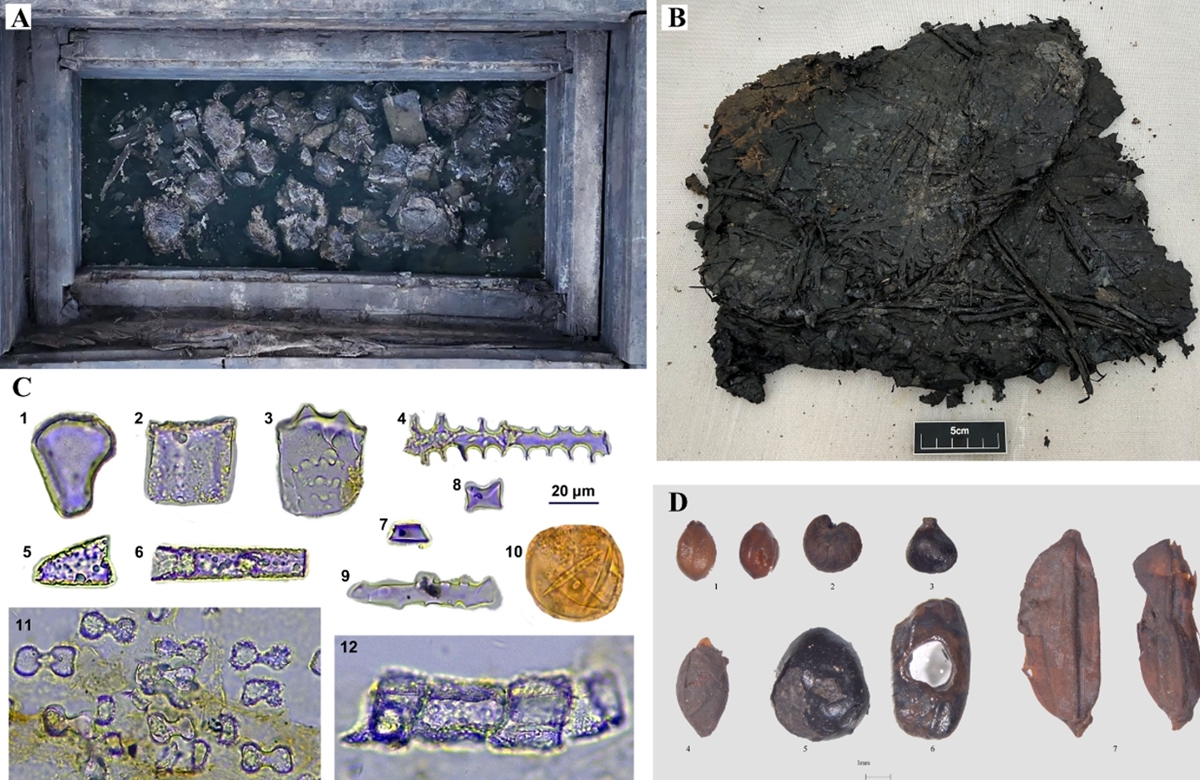
In March 2024, archaeologists from the National Center for Archaeology excavated a large number of well-preserved, waterlogged plant bundles from the tomb's outer coffin chamber. On-site, the plant bundles could be seen tightly wrapped in broad leaves and tied with plant-fiber cords.
A team of researchers led by the National Center for Archaeology, IVPP, and the Chinese Academy of Social Sciences examined 12 of the bundles and found that the wrapping leaves came from oak trees, while the cords were made from grasses.
The bundles mainly contained rice, broomcorn millet, foxtail millet, and cereal seeds, most of which were still in their husks and mixed with inflorescence material. Small amounts of peppercorn, mallow and rice-field weed seeds were also found.
The fact that the bundles were found in a tomb and mainly contained grains still in their husks suggests they were not everyday food, but offerings intended for funerary rituals. "This might reflect a Warring States-era belief that grains served as wealth for the dead in the underworld," Ge Yong, an associate researcher at the IVPP and the study's corresponding author, told the Global Times.
A Qin Dynasty (221BC-206BC) text describes a belief that "soybeans were gold and millet was money" for the dead, indicating that grains held symbolic significance in funerary culture. "The bundles therefore appear to have been ritual offerings prepared for the deceased," Ge said, "not food for the living."
The physical structure of the bundles also resembles that of zongzi, with grains wrapped in leaves and tightly secured with plant-fiber cords. "Similar practices of wrapping grains for burial have also been found elsewhere within the Chu cultural sphere," Ge said, "such as at the Chengyangcheng Site."
At the Chengyangcheng archaeological site in Henan Province, rice and broomcorn millet were also discovered wrapped in oak leaves. "An interesting fact is that we can still find zongzi wrapped with the same oak leaves now in regions related to the Chu cultural sphere."
"The findings suggest that wrapping grains as funerary offerings was a relatively common practice in the Chu state during the Warring States period," Ge said. "And this practice may have been an early form of the zongzi later associated with the legend of Qu Yuan."
These plant bundles share a structure similar to that of modern zongzi and to those described in legends and folklore. This might reflect how, through cultural exchange and heritage, these 2,200-year-old plant bundles likely evolved over centuries, shifting from sacrificial offerings to food, said Ge.
As diverse regional populations adapted the practice, it eventually transformed into the well-known Dragon Boat Festival tradition of eating zongzi. Thus, this structural resemblance might suggest a potential historical lineage; however, experts stressed that the Wuwangdun bundles should not simply be labelled as ancient zongzi.
"We can't define these plant bundles as the earliest zongzi, but rather, we can confirm that by 2,200 years ago at the latest, the Chu region had established a tradition of using this specific form of plant bundles for funeral rites. And this tradition could be a possible origin or precursor of the well-known zongzi," said Ge.
He added that the discovery provides critical physical evidence to explore the origins of zongzi and its cultural heritage.
。据悉,杭州将通过相关官网、公众号推送就业创业政策、服务项目、服务机构名录、求助途径、招聘渠道等清单,个人创业、员工录用等事项都可以集成办理。

B | 面向离校未就业毕业生、在人力社保部门登记失业的青年,杭州提供“1131”服务,即1次政策宣介、1次职业指导、3次岗位推介、1次技能培训或就业见习机会,非本地户籍的青年,在常住地可享受同等就业服务。杭州还将实施青年技能提升行动,开发一批轻量化、精准化的培训项目,符合条件的还能享受培训补贴,今年全市还将提供2万个以上就业见习岗位,其中不少来自专精特新企业,带教质量有保障,并将积极整合各类就业服务资源,探索开展“就业第一课”“职业体验行”、求职能力实训等多元化活动。同时,百日千万招聘、金秋招聘月、城市联合招聘秋季专场等各类招聘活动也将持续推出。只要打开支付宝的“就业创业一张图”,该图会根据你的情况推送合适岗位;对于低保家庭、零就业家庭、防止返贫致贫家庭、残疾毕业生、长期失业青年,杭州还将根据具体情况,优先推荐岗位、优先安排培训见习、优先提供职业指导。此外,杭州将征集各行各业爱岗敬业的青年就业典型故事,为广大求职者提供启发和勇气,同时,持续开展劳动就业法律宣传、招聘陷阱提示等安全教育,如果求职者遇到虚假招聘、就业歧视、“培训贷”等问题,请及时投诉举报,相关部门将重点整治、严厉打击。

C | 上述相关服务,如离校未就业登记/求助、杭州市大学生就业创业政策、杭州市线下公共就业人才服务矩阵、杭州人社招聘信息官方渠道、杭州市大学生就业创业服务官方渠道、就业见习岗位、人事档案管理服务,都可以通过扫描右方二维码获取。 。
。
Current article:http://www.lindunfokangliucishirun.shop/l53nwjb/20260826/5869070.xlsx
Published on:05:29:32
评论
-
关于我们 | 我的网站 版权所有
Copyright ? 2019 我的网站 All Rights Reserved