大众点评
"전주지법에 폭발물 설치" 메일…경찰 수색 중_我的网站

一 |
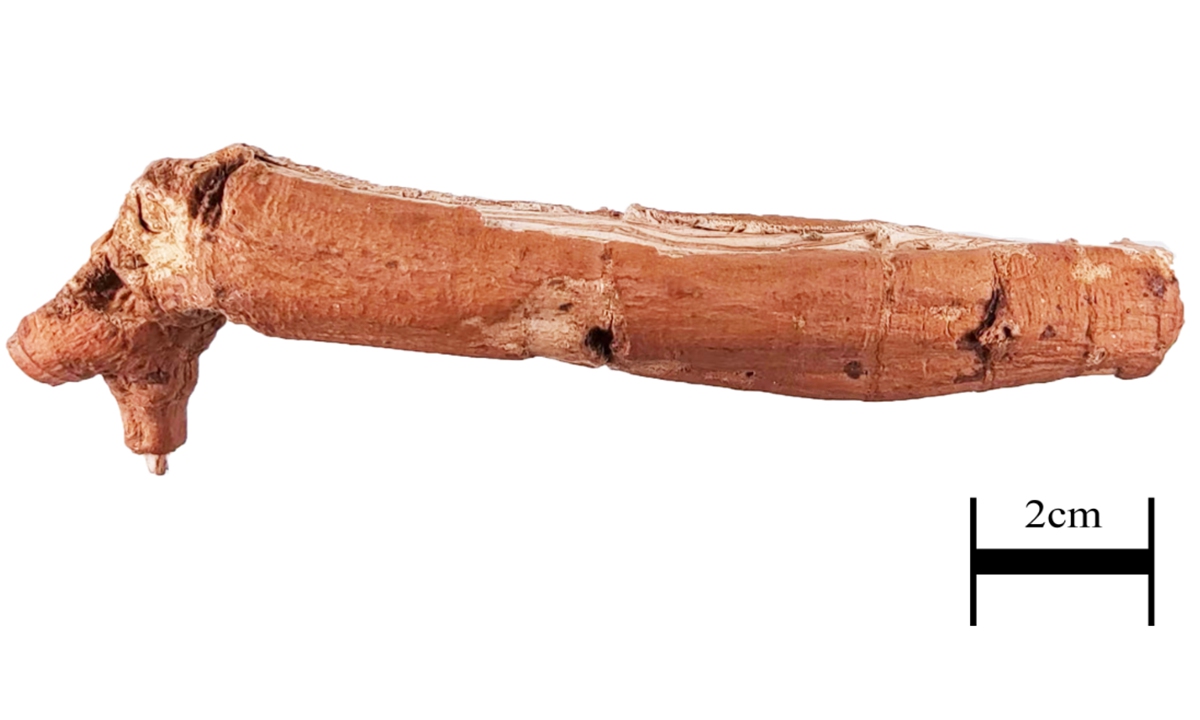
Qingyangshen, or Root of Auricledleaf Swallowwort, a traditional ethnic medicinal plant long used in Southwest China's Yunnan Province. Photo: Scrrenshot from website
A Chinese research team has identified a new potential target to develop antidepressant drug from Qingyangshen, or Root of Auricledleaf Swallowwort, a traditional ethnic medicinal plant long used in Southwest China's Yunnan Province, according to Kunming University of Science and Technology, Science and Technology Daily reported Sunday.
The team, led by professors Xu Tianrui and Xiang Cheng from the university's School of Life Science and Technology, found that Qingyangshen glycosides, the plant's core active compound, can alleviate depression-related behaviors by simultaneously suppressing inflammation, reducing oxidative damage and stabilizing neurotransmitters in the brain.
The findings were published in the international journal Phytomedicine.
Depression has become a widespread mental health disorder globally, while existing clinical drugs fail to provide effective treatment for more than 30 percent of patients, according to the researchers. Previous studies have established a strong link between chronic inflammation and depression, but existing anti-inflammatory drugs have limited targeting capabilities, underscoring the need for new therapeutic targets and lead compounds.
Qingyangshen, a plant of the Cynanchum genus in the Apocynaceae family, has long been used as a traditional medicine by ethnic groups including the Naxi, Yi and Bai peoples in Yunnan, mainly for treating neurological conditions such as epilepsy and neurasthenia.
The researchers systematically examined the pharmacological effects of Qingyangshen extract and its core active compound, Qingyangshen glycosides. Tests using mouse, zebrafish and fruit fly models repeatedly showed that the compound significantly improved depression-related behaviors induced by inflammation, according to the report.
To identify the compound's target, the team developed a dual-discrimination model for four subtypes of prostaglandin E2 receptors and combined it with AI-powered machine learning. The researchers screened hundreds of G protein-coupled receptors and identified the prostaglandin E2 subtype 4 receptor as the direct target of Qingyangshen glycosides.
Multiple molecular experiments confirmed that the compound binds directly to the receptor and acts as an inhibitory ligand. Further experiments involving animals with the receptor knocked out in the hippocampus showed that the antidepressant effects of Qingyangshen glycosides disappeared completely when the receptor was absent, providing the first in-vivo evidence that the receptor is essential for the compound's therapeutic effects.
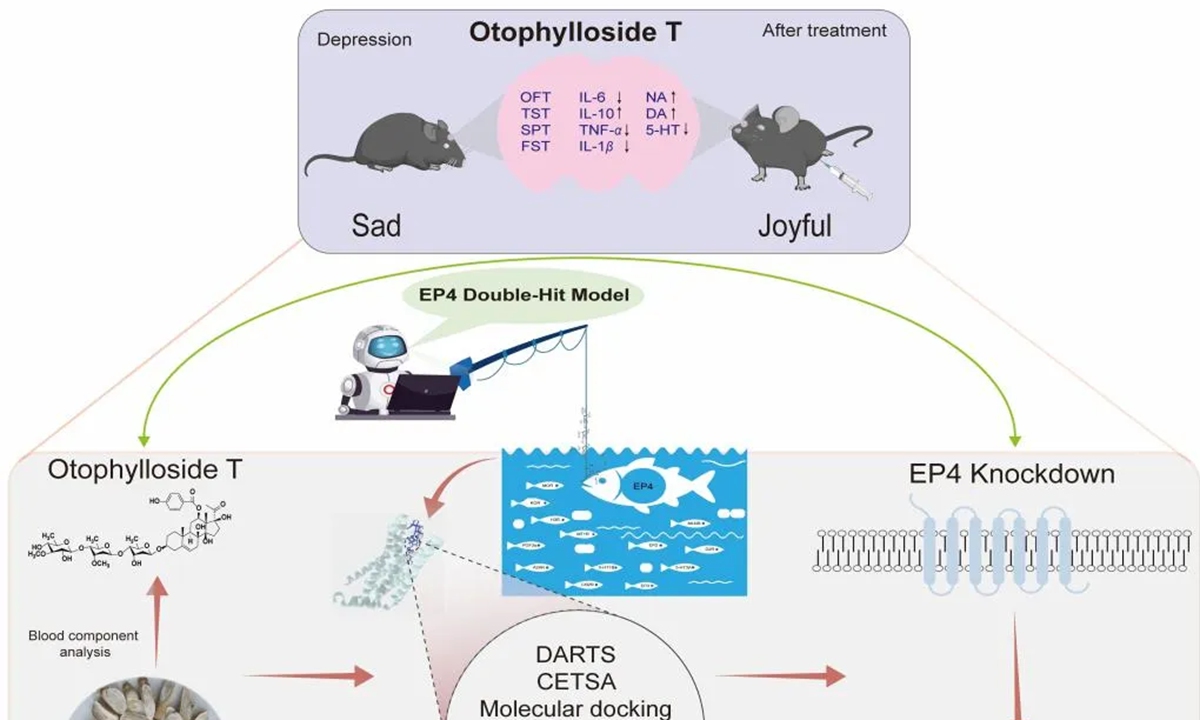
An illustration of the research. Photo: Screenshot from the website
The study establishes the prostaglandin E2 subtype 4 receptor as a potential new target for antidepressant drug development and points to a new approach to treating depression through inflammatory pathways. It also identifies Qingyangshen glycosides as a potential lead compound for developing highly targeted anti-inflammatory antidepressants, creating a research chain from ethnic medicinal plants and active compounds to drug targets and new drug development.
Global Times
。

二 | 타 지역 지방법원에도 동일 내용 메일 발송돼 【전주=뉴시스】 김얼 기자= 전북 전주시 만성동 전주지방법원 신청사 전경. 2019.11.13. [email protected][전주=뉴시스]강경호 기자 = 전주지법에 폭발물이 설치됐다는 신고가 접수돼 경찰이 수색에 나섰다.26일 전북 전주덕진경찰서에 따르면 이날 낮 12시30분께 전주지법으로부터 "법원에 폭발물을 설치했다는 메일을 받았다"는 신고가 접수됐다.신고를 접수받은 경찰은 우선 관할 내 가까운 지구대·파출소 직원이 현장을 둘러보고 있으며, 곧 관할 경찰서 및 경찰특공대가 내부를 수색할 예정이다.이같은 메일은 대전지법, 청주지법, 인천지법 등 전국 다수의 법원에도 동일하게 발송된 것으로 전해졌다.경찰 관계자는 "타 지역에도 동일한 폭발물 관련 메일이 도착한 것으로 알고 있다"며 "실제 위협 가능성은 낮아보이나 현장 수색을 실시할 예정"이라고 말했다.。
Current article:http://www.lindunfokangliucishirun.shop/list_3mh/jazl.xlsx
Published on:00:07:00
 福州立法保护船政文化史迹 提出分类划定保护区域
爸爸去哪儿
福州立法保护船政文化史迹 提出分类划定保护区域
爸爸去哪儿
 就在今天!买手机政府补贴正式实施,苹果等手机突然集体降价,怎么买最划算?这笔账算好了→
斯巴达克斯第三季
就在今天!买手机政府补贴正式实施,苹果等手机突然集体降价,怎么买最划算?这笔账算好了→
斯巴达克斯第三季
 乒乓球常规挑战赛突尼斯站:中国队七人晋级单打第二轮
田径女神走红
乒乓球常规挑战赛突尼斯站:中国队七人晋级单打第二轮
田径女神走红

 微信
微信 移动端
移动端


