卧虎藏龙
配1.1米全景贯穿式星际屏!传祺越7将于9月2日开启预售_我的网站

一 |
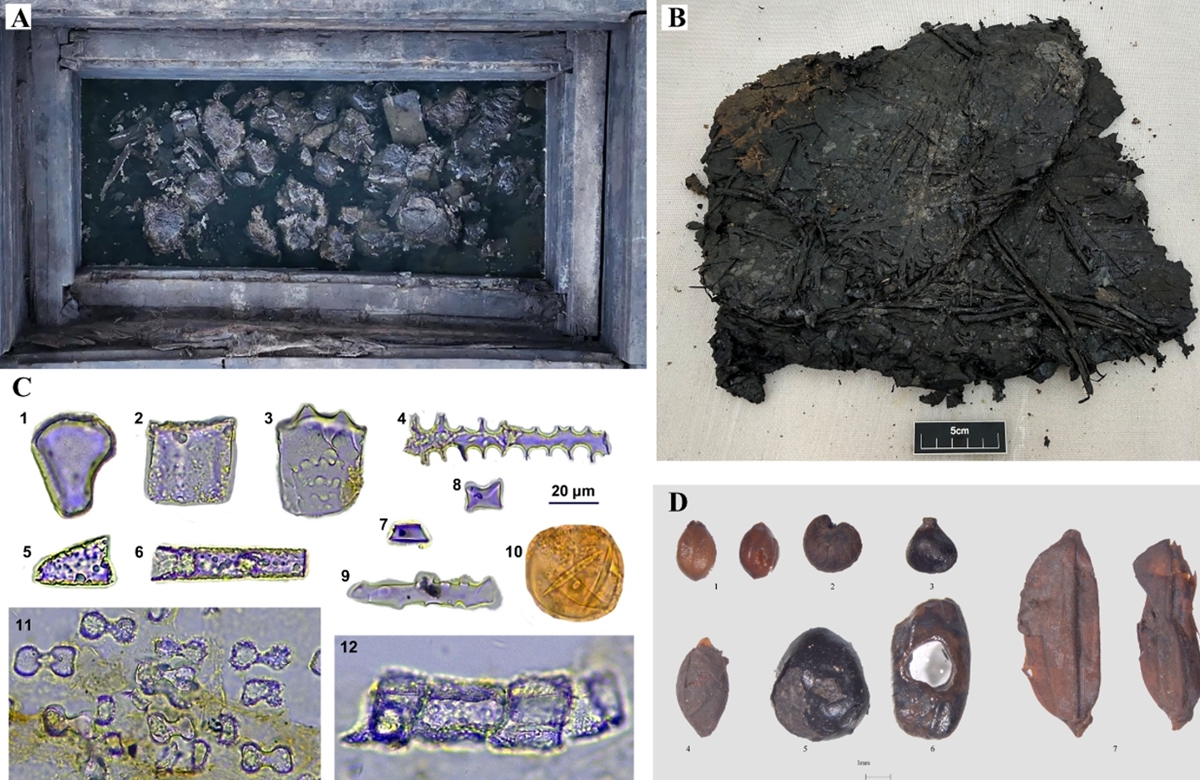
Photo: Courtesy of the Institute of Vertebrate Paleontology and PaleoanthropologyArchaeologists have unearthed a collection of plant-wrapped bundles dating back about 2,200 years that closely resemble modern-day
zongzi, the glutinous rice dumplings traditionally eaten during China's Dragon Boat Festival, according to a report by the Institute of Vertebrate Paleontology and Paleoanthropology (IVPP) under the Chinese Academy of Sciences (CAS). This study was published in the National Science Review.
In March 2024, archaeologists from the National Center for Archaeology excavated a large number of well-preserved, waterlogged plant bundles from the tomb's outer coffin chamber. On-site, the plant bundles could be seen tightly wrapped in broad leaves and tied with plant-fiber cords.
A team of researchers led by the National Center for Archaeology, IVPP, and the Chinese Academy of Social Sciences examined 12 of the bundles and found that the wrapping leaves came from oak trees, while the cords were made from grasses.
The bundles mainly contained rice, broomcorn millet, foxtail millet, and cereal seeds, most of which were still in their husks and mixed with inflorescence material. Small amounts of peppercorn, mallow and rice-field weed seeds were also found.
The fact that the bundles were found in a tomb and mainly contained grains still in their husks suggests they were not everyday food, but offerings intended for funerary rituals. "This might reflect a Warring States-era belief that grains served as wealth for the dead in the underworld," Ge Yong, an associate researcher at the IVPP and the study's corresponding author, told the Global Times.
A Qin Dynasty (221BC-206BC) text describes a belief that "soybeans were gold and millet was money" for the dead, indicating that grains held symbolic significance in funerary culture. "The bundles therefore appear to have been ritual offerings prepared for the deceased," Ge said, "not food for the living."
The physical structure of the bundles also resembles that of
zongzi, with grains wrapped in leaves and tightly secured with plant-fiber cords. "Similar practices of wrapping grains for burial have also been found elsewhere within the Chu cultural sphere," Ge said, "such as at the Chengyangcheng Site."
At the Chengyangcheng archaeological site in Henan Province, rice and broomcorn millet were also discovered wrapped in oak leaves. "An interesting fact is that we can still find
zongzi wrapped with the same oak leaves now in regions related to the Chu cultural sphere."
"The findings suggest that wrapping grains as funerary offerings was a relatively common practice in the Chu state during the Warring States period," Ge said. "And this practice may have been an early form of the
zongzi later associated with the legend of Qu Yuan."
These plant bundles share a structure similar to that of modern
zongzi and to those described in legends and folklore. This might reflect how, through cultural exchange and heritage, these 2,200-year-old plant bundles likely evolved over centuries, shifting from sacrificial offerings to food, said Ge.
As diverse regional populations adapted the practice, it eventually transformed into the well-known Dragon Boat Festival tradition of eating
zongzi. Thus, this structural resemblance might suggest a potential historical lineage; however, experts stressed that the Wuwangdun bundles should not simply be labelled as ancient
zongzi.
"We can't define these plant bundles as the earliest zongzi, but rather, we can confirm that by 2,200 years ago at the latest, the Chu region had established a tradition of using this specific form of plant bundles for funeral rites. And this tradition could be a possible origin or precursor of the well-known
zongzi," said Ge.
He added that the discovery provides critical physical evidence to explore the origins of
zongzi and its cultural heritage.
。 8月25日消息,
广汽传祺全新中大型SUV越7将在9月2日开启预售。目前官方已经上线先享预订活动,消费者支付199元,就有机会解锁最高价值20000元的综合购车权益,覆盖置换补贴、选装礼包、周边礼品等多项福利。
外观上,越7采用辨识度很高的方盒子硬派造型,车身线条干脆利落。车头使用封闭式新能源风格前脸,搭配GAC字母标识,车尾配备侧开门以及外挂备胎小书包。新车提供塔漠辉砂、黑独墨影等四款车身配色,兼顾硬派气质与个性化选择。
整车尺寸为5045/2004/1933mm,轴距达到2900毫米,30°接近角、33°离去角,310毫米离地间隙,保证了不错的基础越野能力。
内饰是这台车的一大亮点,车内最吸睛的当属1.1米全景贯穿式星际屏,内置五套不同风格主题,再搭配一块15.6英寸2.5K中控屏幕,搭载星河智舱ADiGO 7.0车机系统。
车辆支持多种手机互联方式,还配备高轨卫星通信、宠物模式,全车20扬声器音响带来优秀听觉体验。第二排座椅靠背角度可调,座椅放倒之后可以形成1.9米的纯平大床,拓展容积可达1860L,露营出行实用性很强。 动力层面,越7搭载1.5T插电混动系统,发动机最大功率125kW,提供三种不同容量电池版本,对应不同WLTC纯电续航。
底盘硬件十分扎实,拥有闭式双腔空气悬架、连续可变阻尼减振器,配备前后机械差速锁与能量中锁,搭配9+X全地形模式。
【本文结束】如需转载请务必注明出处:
责任编辑:知敏
文章内容举报
。
Current article:http://www.lindunfokangliucishirun.shop/list_7312t7s/gxdsn.docx
Published on:03:20:13
